
Remembering the Sinclair ZX Spectrum
Personal memories of my first home computer and reflections on its impact

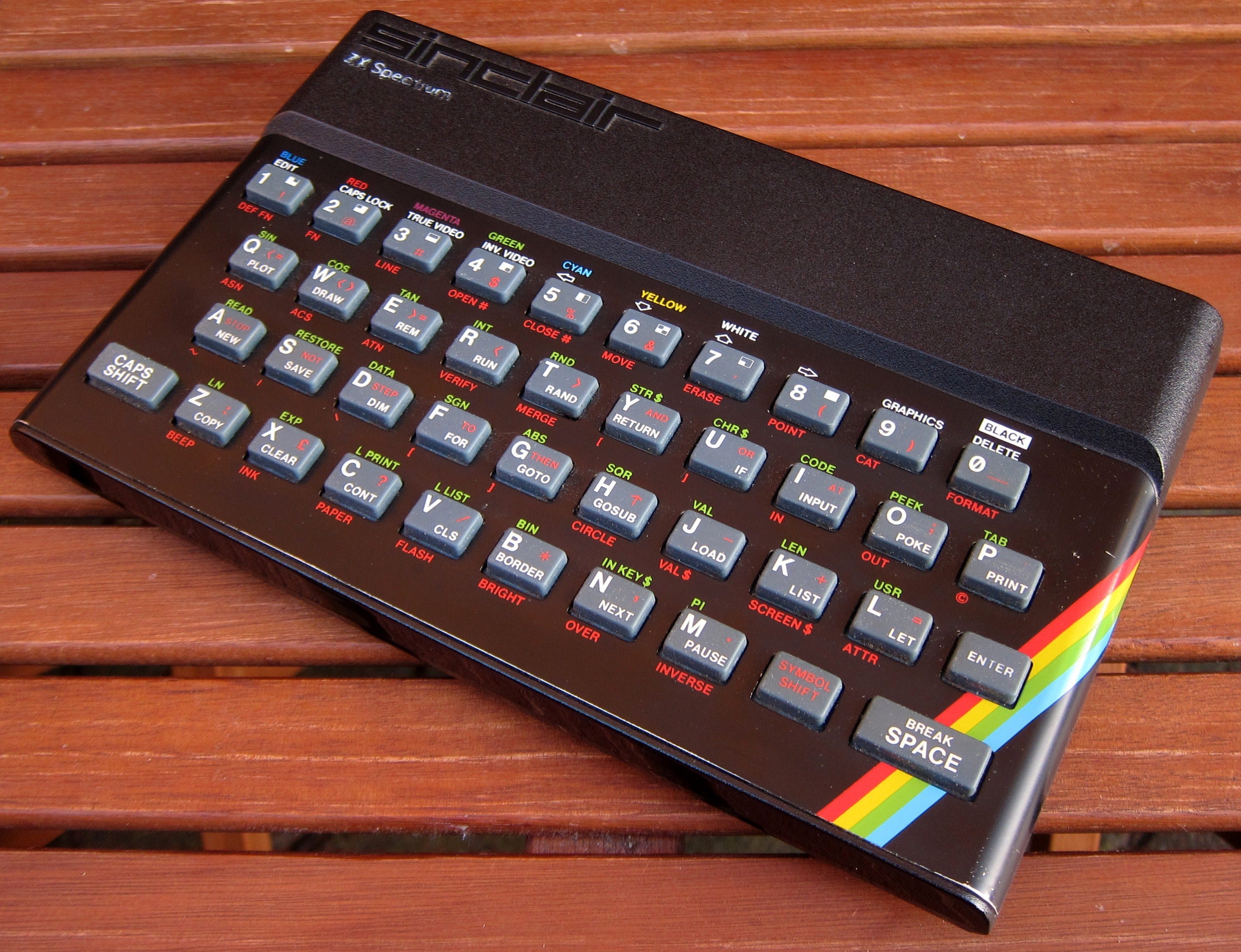
The Sinclair ZX Spectrum was a very popular home computer in the UK. It was released in 1982, the year I turned 14.
Like its predecessor (the ZX81), I first became aware of the Spectrum through adverts in electronics magazines.
It improved on its predecessor in several ways, such as adding colour and sound, more RAM (16/48 KB vs 1 KB), more ROM (16 KB vs 8 KB), and an improved keyboard.
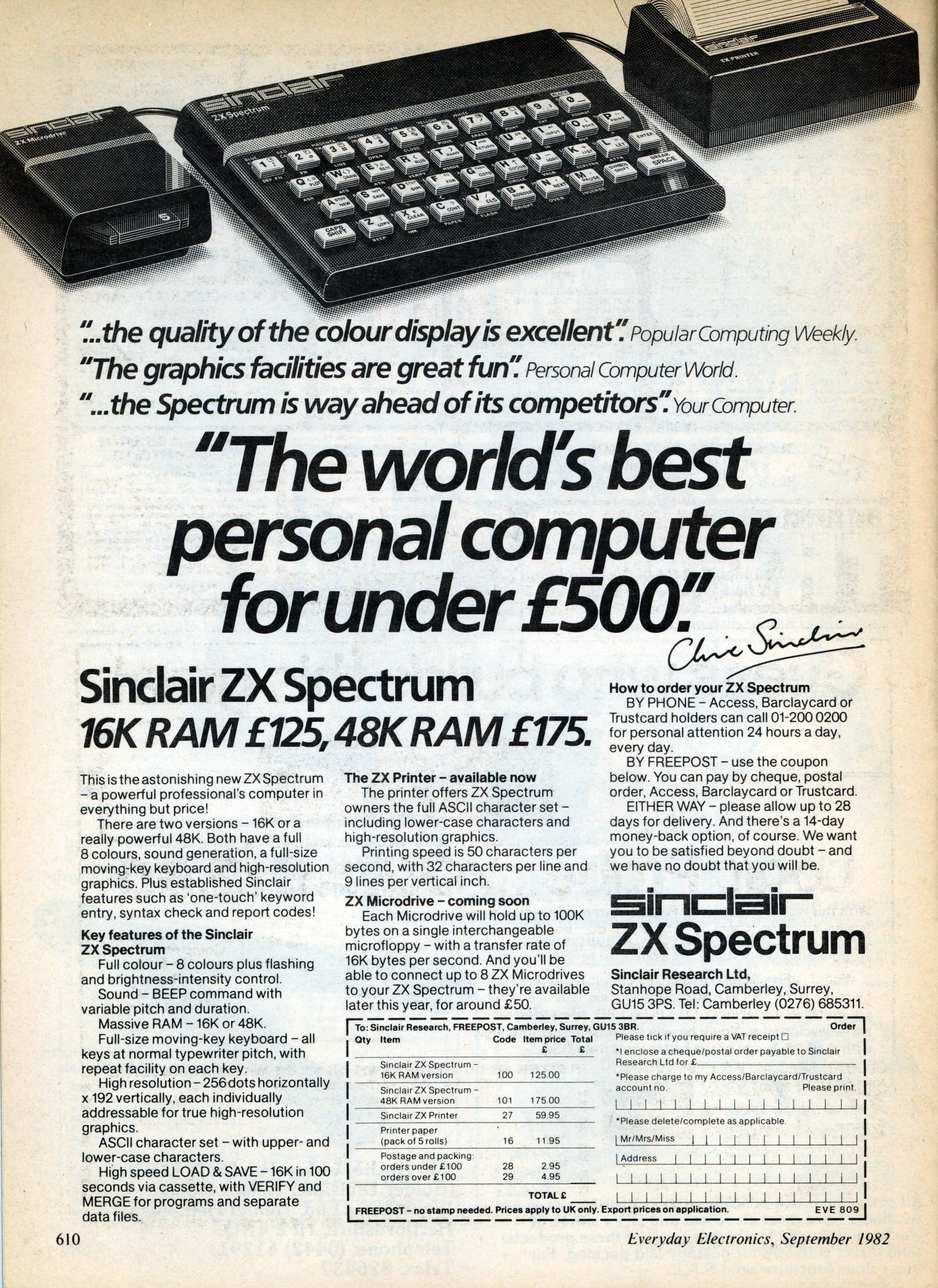
The Spectrum’s Z80 microprocessor was clocked a little faster than the one in the ZX81 (3.5 MHz instead of 3.25 MHz), and it did away with its predecessor’s FAST and SLOW modes, by delivering the best of both. (For more, see my post about the ZX81.)
The Spectrum’s rubber keyboard wasn’t anything like as good as the ones on more upmarket machines like the Apple II and BBC Micro. But I found it perfectly satisfactory, and I certainly did a lot of typing on my machine!
Some people think the Oric-1 (a Spectrum rival) had a better keyboard. Whether that’s true or not, the Spectrum marked a big improvement over the ZX81’s membrane keyboard.
Programs were usually stored on cassette, using a normal audio cassette recorder. Running at 1500 bps, the Spectrum’s cassette interface was about five times faster than the ZX81’s. It was also more reliable.
As an alternative to cassette, the optional Microdrive could be used instead. Microdrives were a cheap but unreliable floppy disk alternative that used a loop of tape. They were also used later on the Sinclair QL.
Despite its improvements over the ZX81, the Spectrum was still a small and relatively simple machine, positioned firmly at the cheaper end of the market.
It had very few external connections. The single expansion port allowed the ZX Printer (see later) to be added, plus various third-party peripherals.
The Sinclair Interface 1 and 2 could also be connected, to enable add-ons such as joysticks, Microdrives, modems, and serial printers to be connected.
Becoming a ZX Spectrum owner
My high school computer studies class exposed me to computing in the early 80s and got me interested in the subject. But the Apple II and BBC Micro used at school were quite expensive, meaning few parents could afford to buy one for their children.
So when my computer studies teacher said she had a Sinclair ZX81 for sale, I was very interested. Unfortunately, by the time I’d convinced my parents, a classmate had beat me to it.
A few months after missing out on the ZX81, my parents bought me a 16K Sinclair ZX Spectrum as a Christmas present! I was very excited and soon forgot about the ZX81.
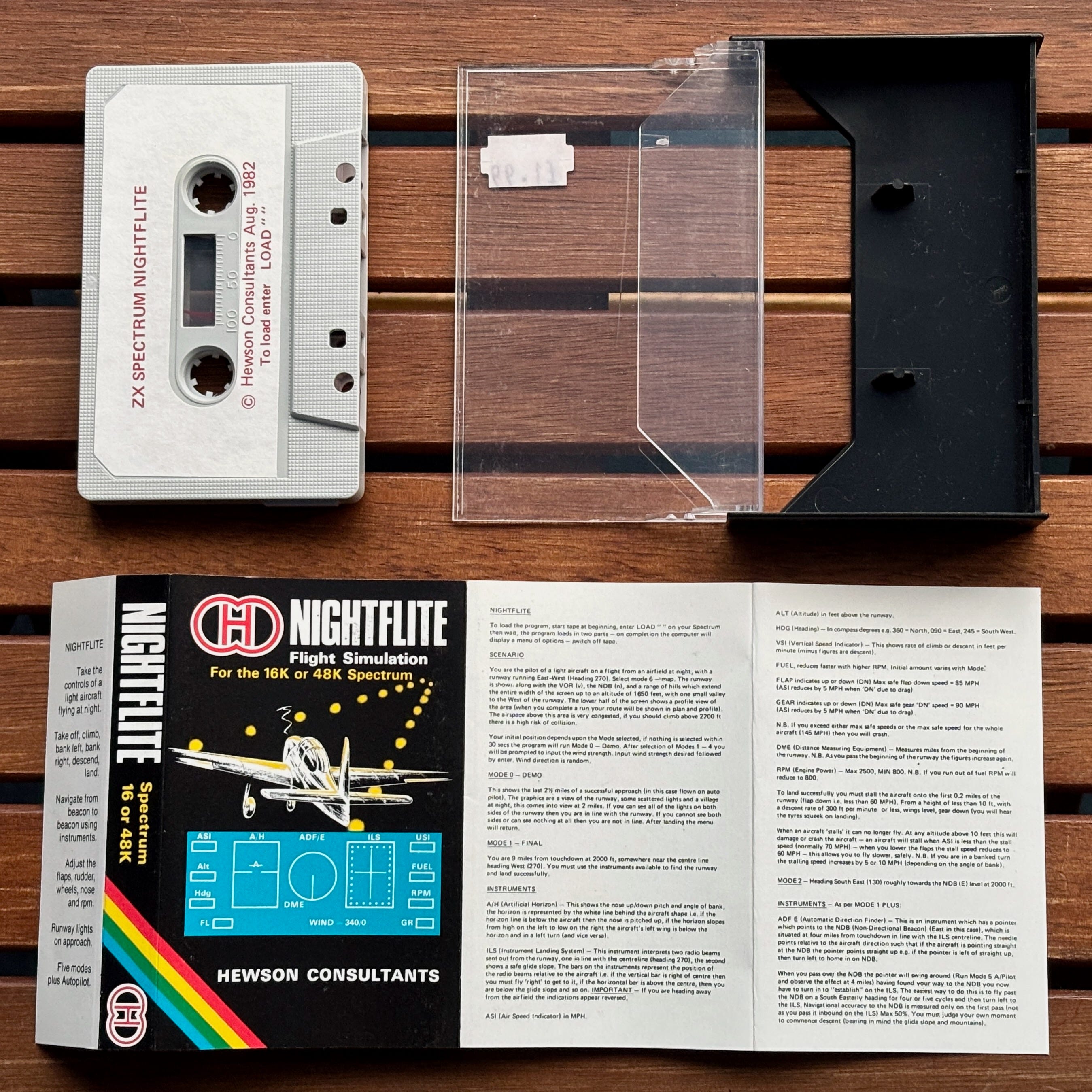
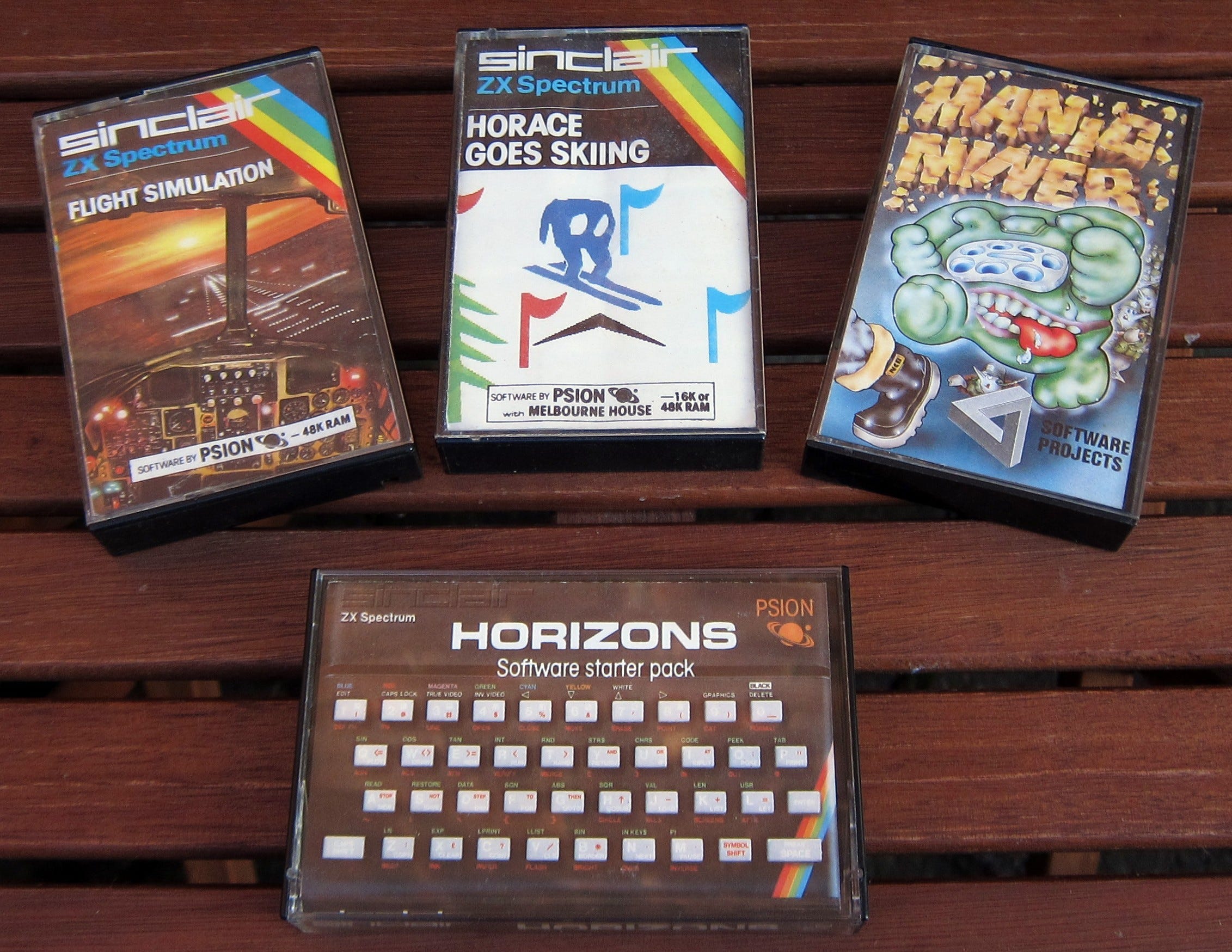
I’ll never forget loading the Horizons cassette for the first time, and playing games such as Night Flite and Horace Goes Skiing.
Wanting to program
The idea of owning a programmable computer with a built-in sound generator was very appealing to me as a child. The Spectrum’s shortcomings didn’t matter too much back then.
The Spectrum was mine, and I was just glad to have anything I could use at home.
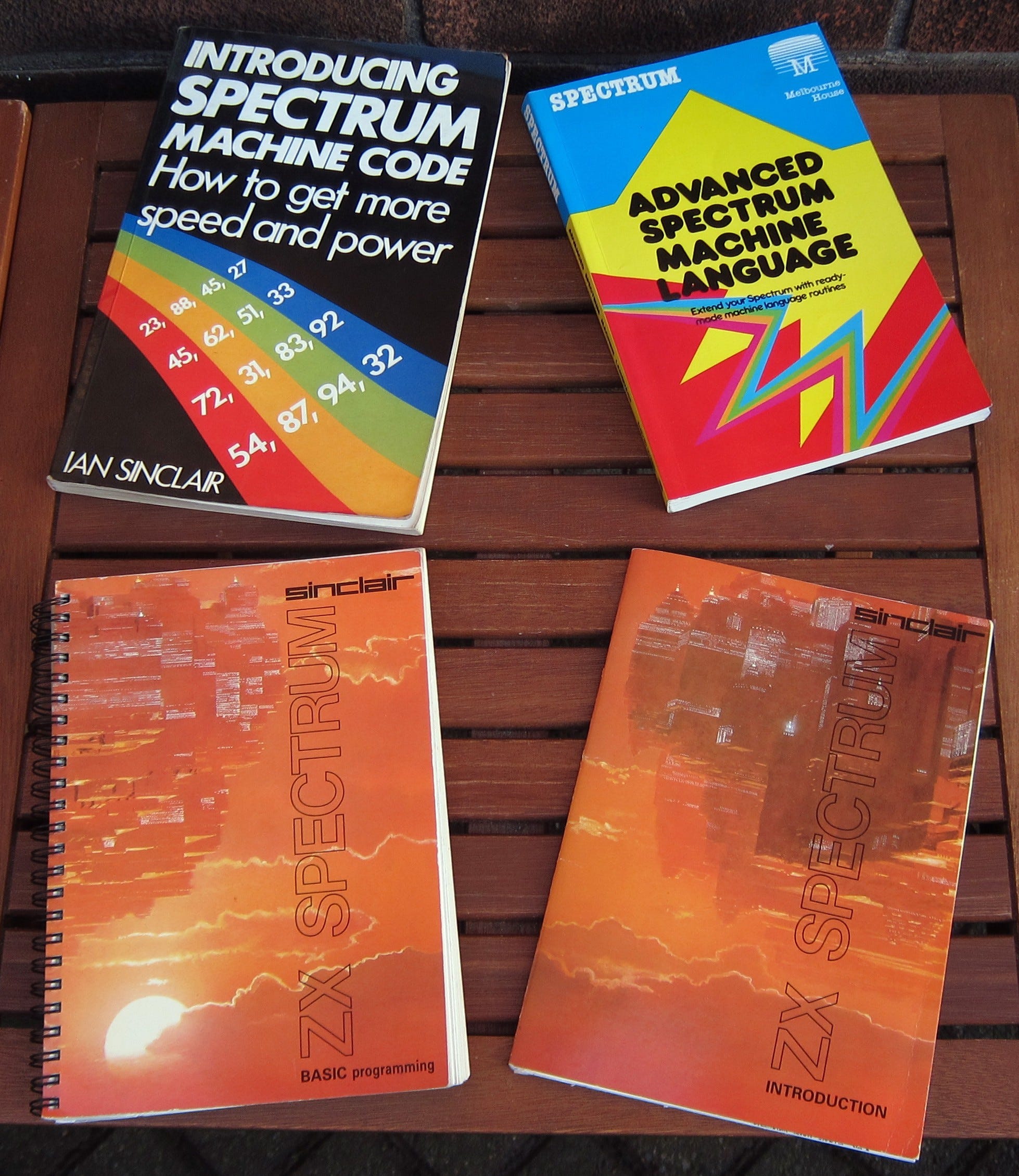
As the months went by, I explored every aspect of the Spectrum and read all the manuals from cover to cover.
I learned to program using the Spectrum’s version of BASIC, as well as Z80 assembly language. (People usually called it machine code because code was often hand assembled.)
The Spectrum’s BASIC language had support for graphics and sound, unlike machines such as the Commodore 64. That made it easy for beginners to experiment.
Graphics
Considering its reasonable price, the Spectrum’s graphics were not bad at 256 x 192 with 8 colours (or 15 including ‘bright’ versions).
Unfortunately, its colour attribute system limited each 8 x 8 block to just two different colours.
Making music
I tried to make music and percussion sounds, by writing my own software. But after a while, I became increasingly disillusioned with the Spectrum’s sound facilities.
Rather like the Apple II, the Spectrum could only generate sound as a series of pulses or clicks, each of which used processor time. So there was no proper control over waveform or volume — and there was only a single channel.
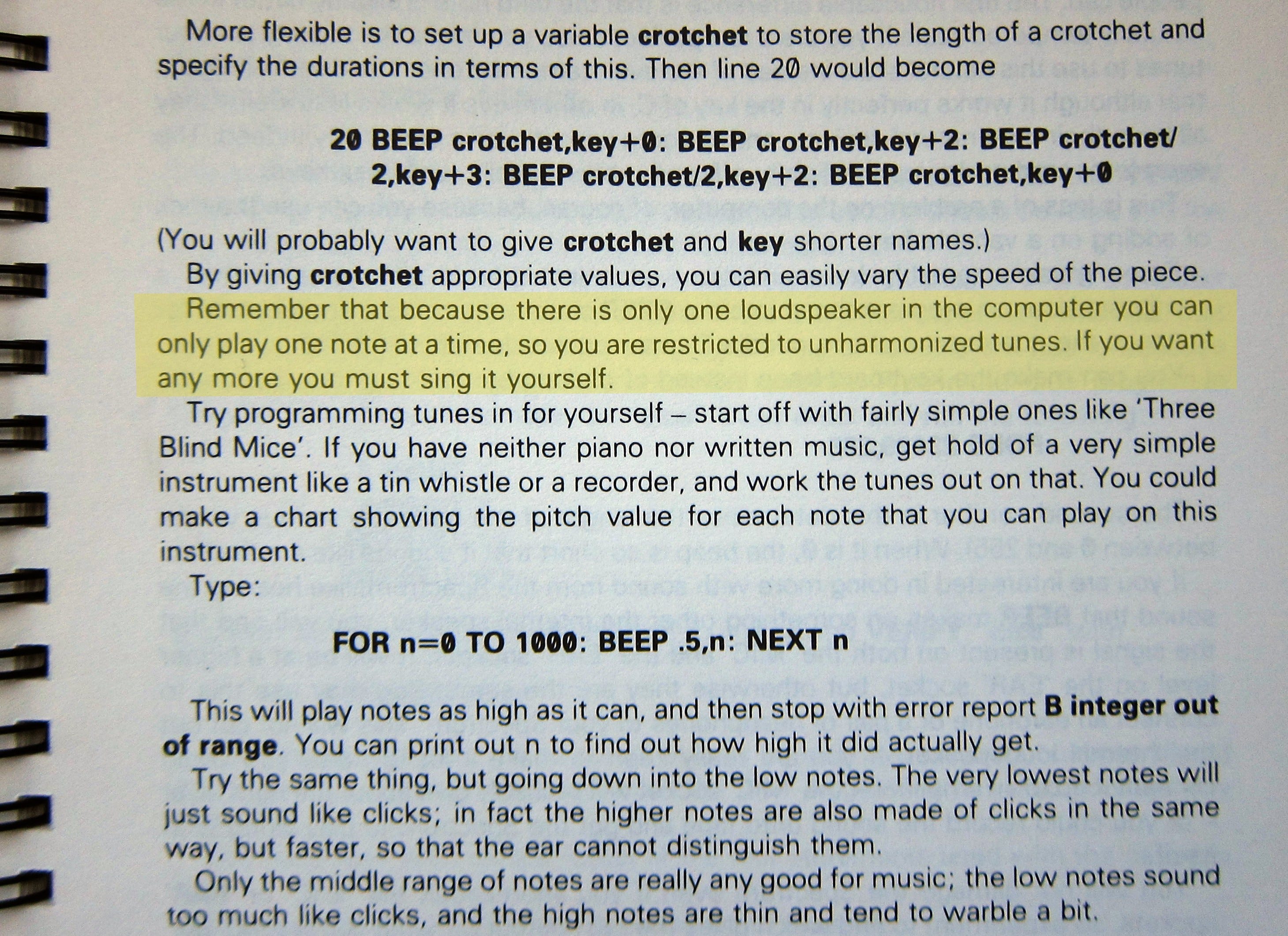
The Spectrum’s BASIC manual had a silly comment in the chapter on sound, saying that it could only play one note at a time because it only had one loudspeaker. Even as a child, I knew that was nonsense!
Software tricks could go some way to making more complex sounds, but the lack of a dedicated sound chip (such as those found in the BBC Micro or Oric-1) meant that it was not the best choice for someone interested in making music.
Sound add-on
I was interested in electronics from an early age, having previously experimented with various circuits and audio amplifiers.
When browsing the Maplin catalogue, I spotted a sound chip like the one used in the BBC Micro, and it got me thinking.
Although most people might have bought a ready-made sound generator for their Spectrum, to the 14-15 years old me, it seemed natural to design and build my own circuit.
I was pleased when my sound generator add-on worked as expected, and I used it for weeks. But then disaster struck…
There wasn’t enough room at home to leave the Spectrum set up permanently, so I used to store it away every night. That meant the polarising key on the edge connector — which connected my sound circuit to the Spectrum’s expansion port — soon wore out.
Without a functioning polarising key, the connector shorted out the contacts on the Spectrum’s PCB, which damaged the ULA chip in the computer.
I complained to Maplin, and they gave me a free replacement connector.
After the Spectrum was repaired, I couldn’t afford to risk damaging it again and stopped experimenting with add-ons.
Improved models came too late for me
In 1984, the Spectrum+ was released. That was really just a 48K machine with a different case and keyboard — and it still lacked a dedicated sound chip.
At the time, it seemed like the Spectrum was never going to get any improvements in that area, so I started looking at computers which had good sound facilities.
That’s when the Commodore 64 grabbed my attention.
Its SID chip, which was responsible for sound, seemed like a sort of mini-synthesizer — so it wasn’t long before I switched to that machine. (But that’s another story…)
In 1986, it was more than a little frustrating to see Amstrad take over the Sinclair brand release new and improved models — starting with the ZX Spectrum +2.
In addition to an integrated cassette recorder, the Spectrum +2 had more RAM.
More importantly, it also had — at long last — a sound chip!
If it had arrived sooner, I may have stayed with the Spectrum — although the Commodore 64’s SID chip was still more sophisticated.
The smell of the ZX Printer
Towards the end of my time with the Spectrum, my parents bought me a ZX Printer as a birthday present.
It was very nice to have, but I was a little disappointed that it could not print on ordinary paper, and that it was so small.
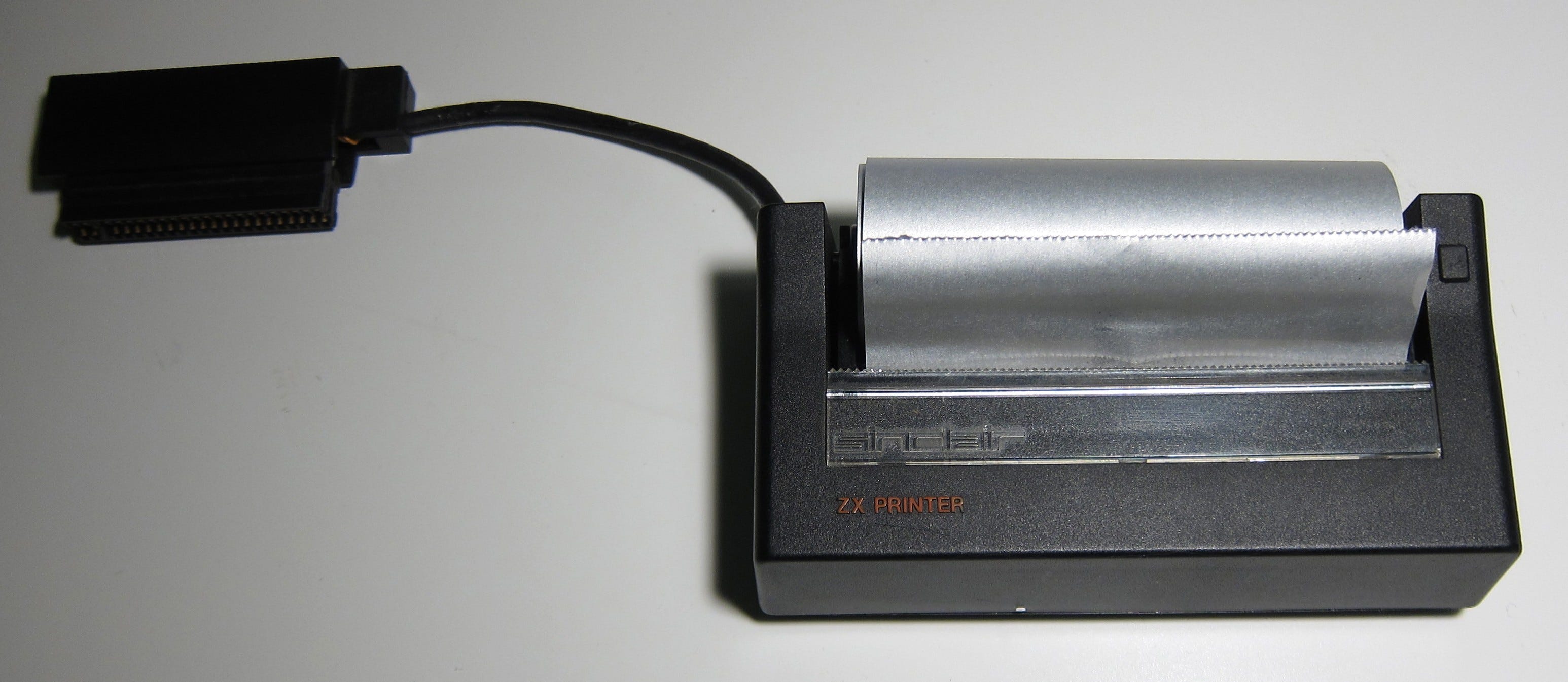
The ZX Printer required its own special rolls of aluminium-coated paper — and they were expensive, especially considering how small they were!
It was a novelty to print screen-shots and program listings. I remember attaching a program listing to a school project and feeling slightly embarrassed about it being on narrow, curled-up, silver-coloured paper.
Ultimately, the printer was of limited practical use.
When using the ZX Printer, in the back of my mind I always wondered whether the smell of burning aluminium that it produced was harmful!
Around the time when I had a ZX Printer, I seem to remember Oric computers having a small printer which could print in four colours on narrow rolls of normal paper.
The Oric’s better printer and sound certainly made me a little envious.
Final thoughts
Sadly, my original 16K Spectrum had to be sold in the 1980s, to help pay for my next computer, the Commodore 64.
I always regretted letting my Spectrum go, so around 1988, I bought a second-hand 48K ZX Spectrum, which I still have.
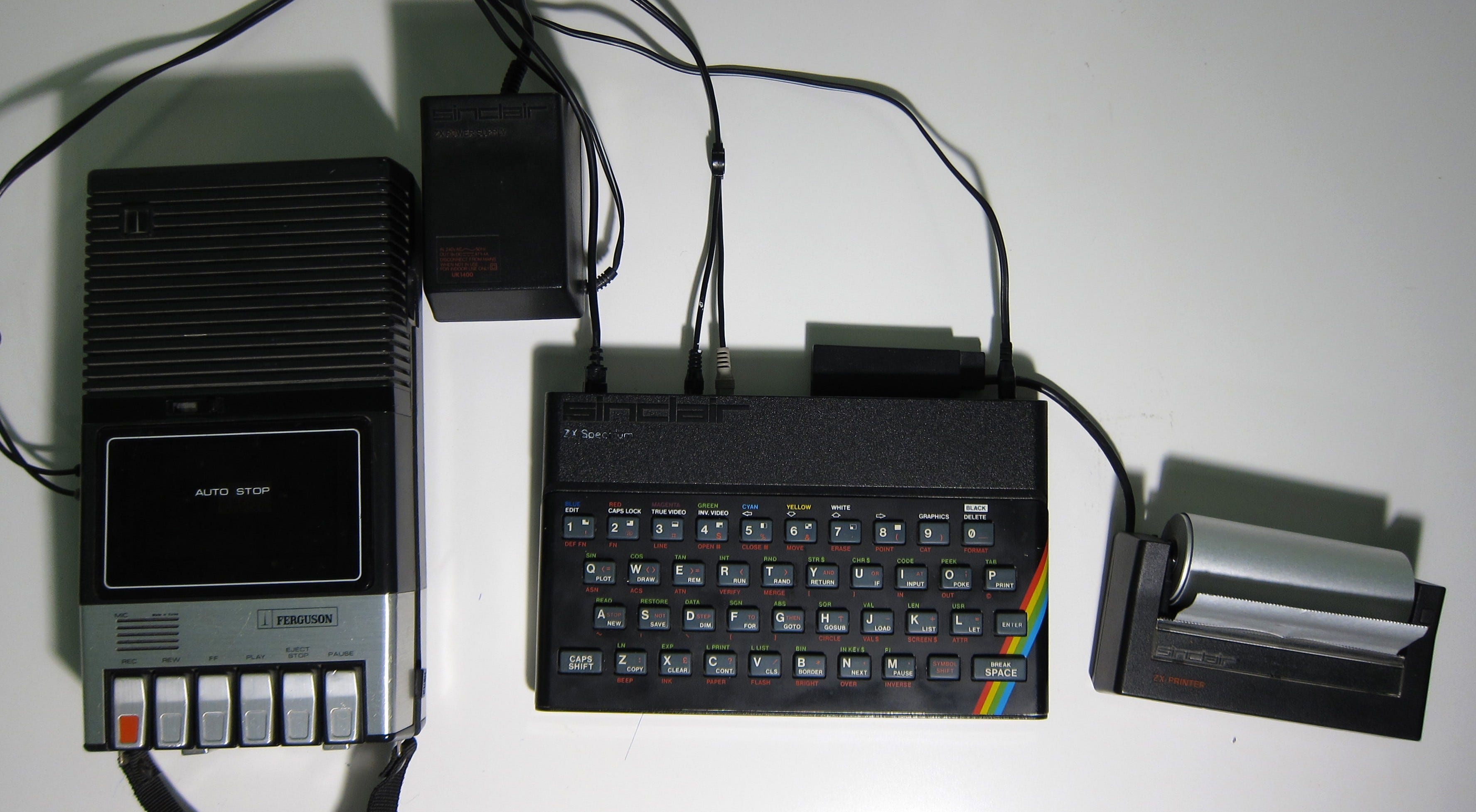
Unfortunately, my replacement Spectrum wasn’t in very good condition when I bought it. That’s a shame because my original 16K model was in mint condition.
From time to time, I set up my ZX Spectrum again. Those old cassettes bring back plenty of memories. And I can still remember some BASIC demo programs — as well as some Z80 instructions, such as DJNZ!
Do you have memories of using the ZX Spectrum? Share your thoughts in the comments section below.
Thank you for reading!
~ Alan ~
Related articles
External links
Happy 30th Birthday Sinclair ZX Spectrum (The Register)
ZX Spectrum is 40 (The Register)
ZX Spectrum (Wikipedia)
This article was first published in 2018 on my former website, Jigsaw Mix. It was updated for Substack in 2025. In between, it has also been on Starchip Designs (Blogspot) and Medium.