
Remembering the Sinclair QL
The computer that attempted to leap ahead with the 68008 processor and Microdrives was ultimately hampered by cost-cutting


Leaping ahead
In the UK, Sinclair Research had great success with low-cost home computers in the early ‘80s, including the ZX81 and ZX Spectrum.
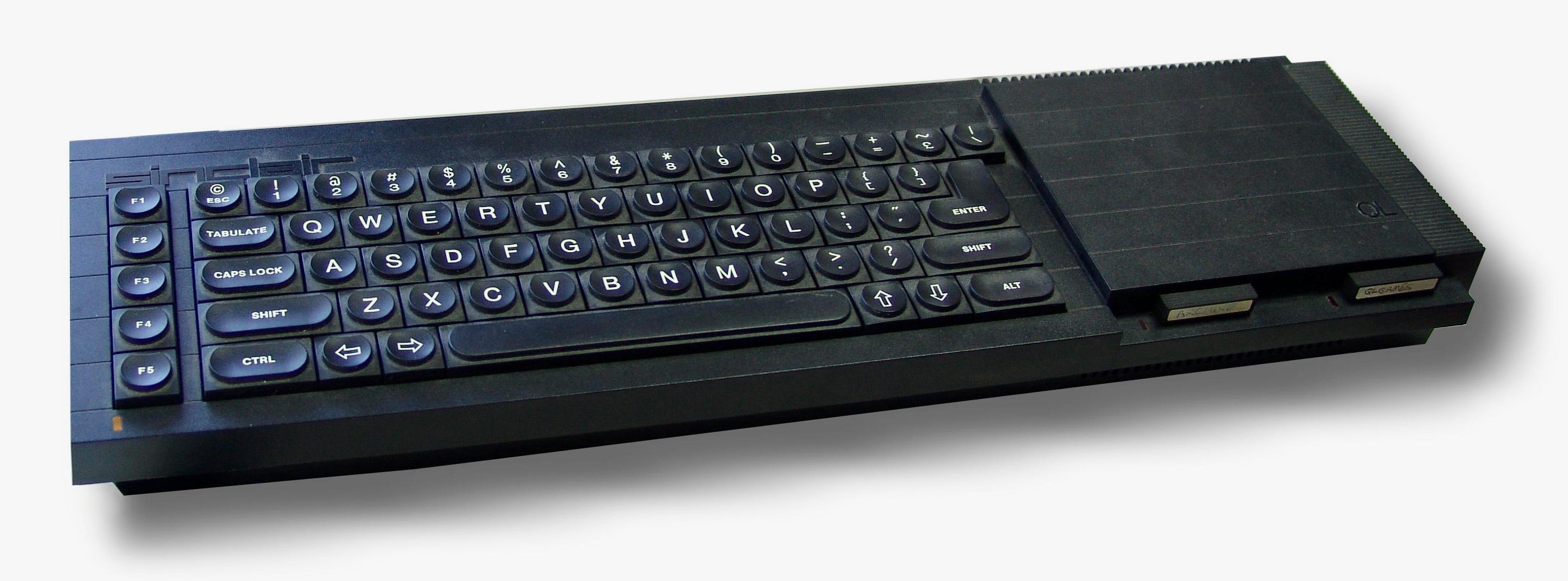
In 1984, they attempted to move upmarket with the release of the QL. The letters stood for “Quantum Leap”, and the machine featured significantly more advanced hardware.
As the following advert shows, Sinclair thought the machine could rival computers such as the IBM PC and Apple Macintosh — for a fraction of the price.
Cost cutting
I feel bad for criticising Sinclair because my first computer was a ZX Spectrum, and I loved that machine.
However, the QL suffered from cost-cutting, and its feature set wasn’t a good match for business users or gamers.
CPU and RAM
Sinclair made a good choice by selecting the 68000 family for the QL’s microprocessor. However, rather than using the standard 68000 chip (found in the original Apple Macintosh and later Commodore Amiga and Atari ST), they opted for the 68008.
The chip was clocked at a respectable 7.5 MHz, but being a cut-down version of the 68000 meant the data bus was halved to 8 bits, making it much slower. Also, the address space was 16 times smaller because it had a narrower address bus.
Despite the 8-bit external data bus, Sinclair referred to the QL as a 32-bit machine because of the chip’s internal registers. That was a bit of a stretch, and I don’t think it fooled anyone.
The QL had 128 KB of RAM as standard and could be upgraded to 896 KB. Compared with the ZX Spectrum (with 16 or 48 KB initially), that sounded like quite a lot.
For comparison, the original Mac also had 128 KB, but it was soon available with 512 KB. The Amiga could be expanded to 8.5 MB, but to be fair, that came after the QL.
Cheap keyboard
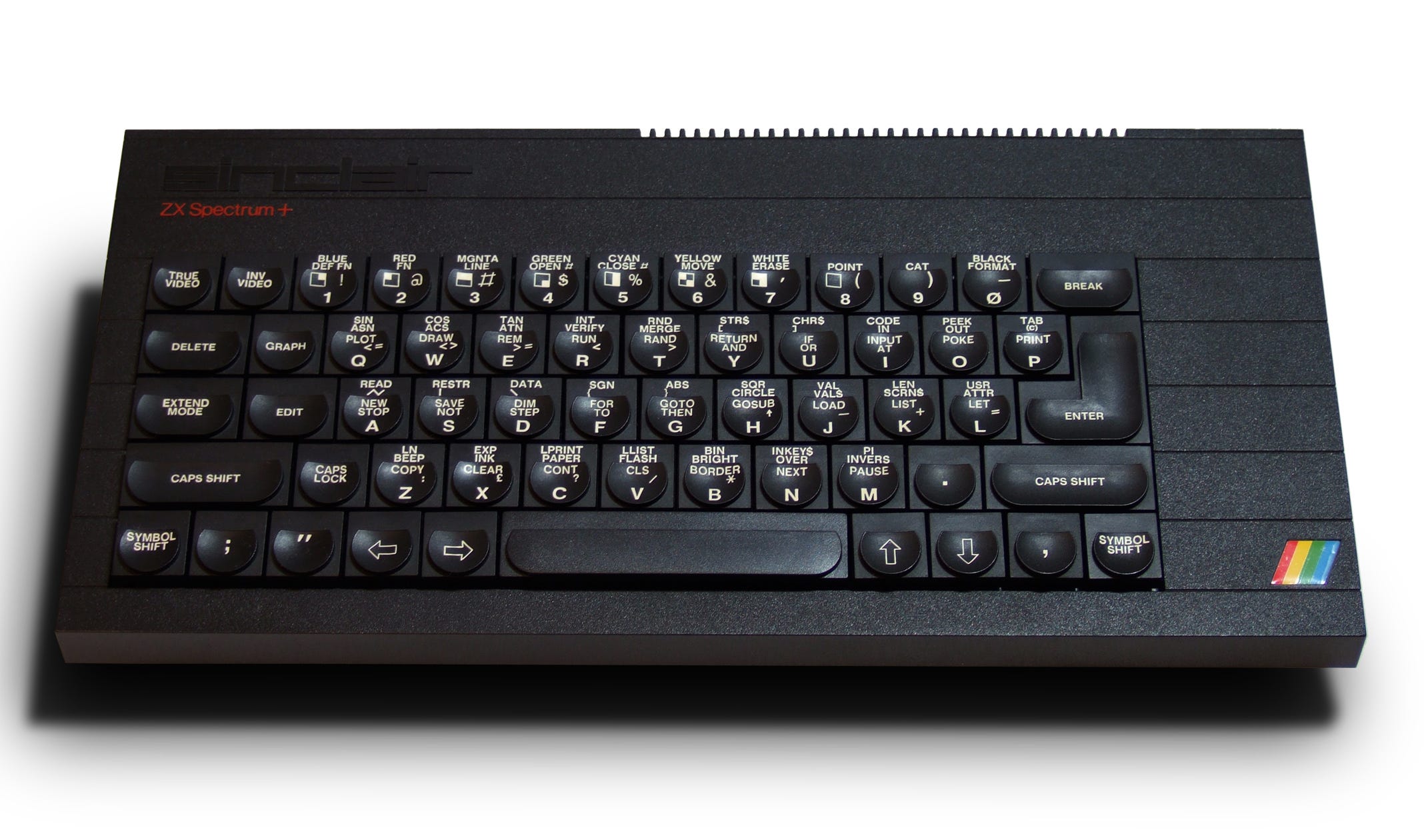
The QL’s keyboard looked quite good compared to the rubber keys found on the original Spectrum. Unfortunately, it was still a membrane keyboard underneath.
Sinclair used the same design with the Spectrum+ later in 1984.
Microdrive storage
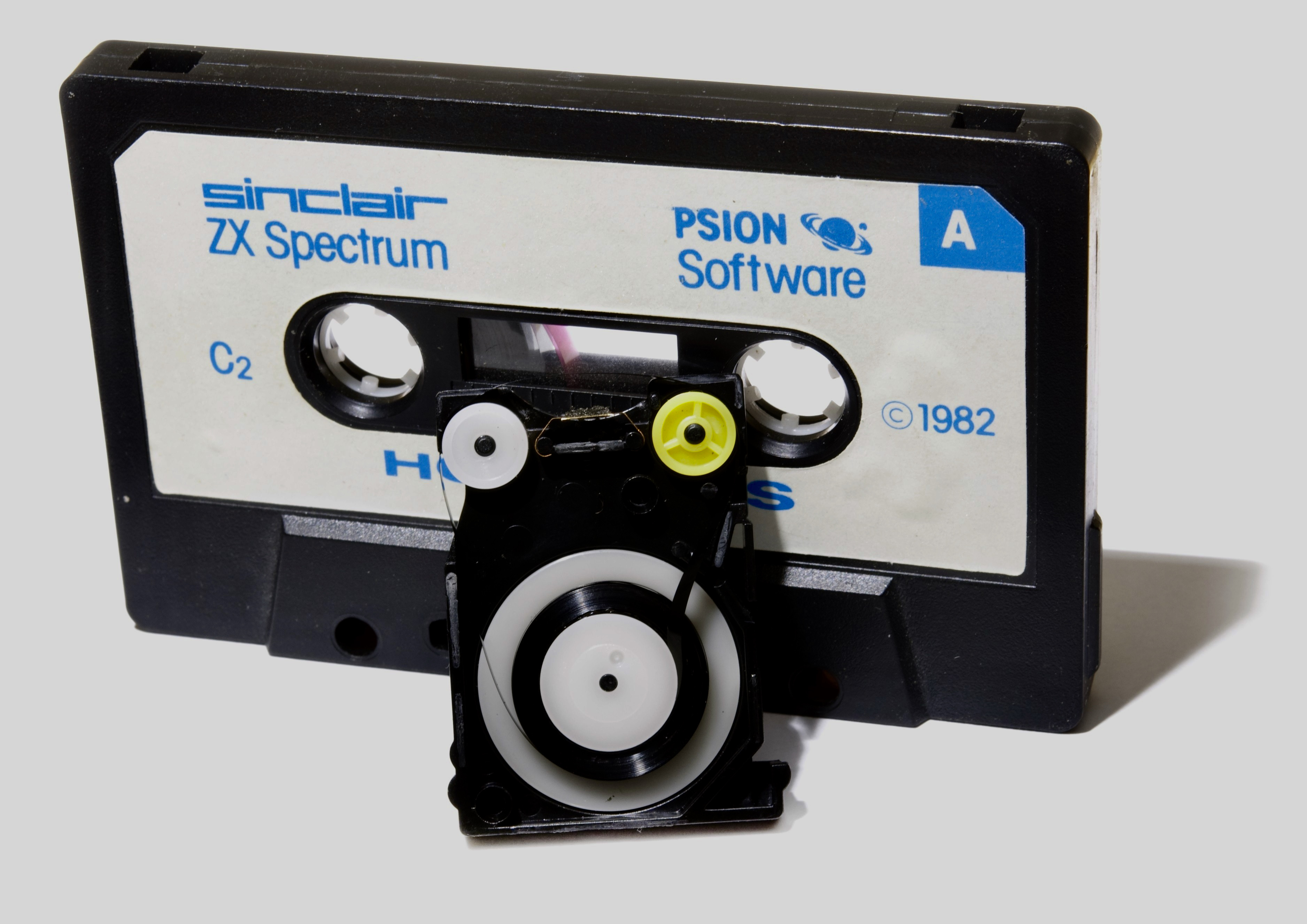
Most computers aimed at the higher end of the market used floppy disks. In another attempt to reduce costs, Sinclair used a slightly updated version of their Microdrive storage system, first released in 1983 for the ZX Spectrum.
Microdrives were based on a loop of tape, which made them slower and less reliable than floppy disks.

Video modes
The QL had two video modes. One had eight colours at a resolution of 256 x 256. The other had four colours at 512 x 256.
The eight-colour mode used the same colours as the ZX Spectrum, while the four-colour mode was limited to black, red, green, and white.
Although somewhat limited, they were adequate for Sinclair’s intended market of serious users rather than gamers.
Beep beep
In the 80s, one of the things that prompted me to switch away from my ZX Spectrum was the lack of a multi-channel sound generator chip.
Sadly, the QL was also lacking in the sound department, and its 8049 microcontroller provided little more than simple beeps. While that was fine for productivity applications, it was not ideal for gaming.
In contrast, computers like the Commodore 64 and BBC Micro had sound chips, and the Macintosh could play 8-bit sampled sound.
Networking
Built-in networking allowed up to 64 QL computers to be connected.
For the time, the 100 kbit/s speed was decent and comparable to the Mac’s AppleTalk network, which ran at 230.4 kbit/s for up to 32 devices.
Software
The QL had a much more advanced BASIC than the ZX Spectrum. It also had a multi-tasking operating system called QDOS.
An office suite was supplied with the machine to try and appeal to business users and more serious home users.
Third-party software vendors didn’t exactly rush to write software for the QL. Perhaps they were waiting to see how it performed in the market. The need to ship software on Microdrive cartridges did not help either.
Market performance
Physically, the QL looked related to the Spectrum+ that came out the same year. I think that was another reason people struggled to think of it as a serious business machine.

Most Spectrum owners didn’t upgrade to the QL due to a lack of games software. Also, there were bugs in the QL’s firmware, and the Microdrives didn’t add to the appeal.
In the end, the QL did not perform well in the market.
After Amstrad took over Sinclair, they discontinued the machine in 1986 rather than addressing its flaws.
Final thoughts
At the time, the QL didn’t offer me the right blend of features.
Although the 68008 CPU caught my attention, the lack of a sound chip put me off. That’s why I switched to the Commodore 64, which was also more affordable.
In those days, I was curious about every new computer and wanted to try them all out. The same is true today, but with limited space at home, I’m trying to resist browsing eBay!
Do you remember the launch of the Sinclair QL, and did you use one? Please share your thoughts in the comments section below.
Thank you for reading!
~ Alan ~
Related articles
External Links
This article was first published in 2018 on my former website, Jigsaw Mix. It was updated for Substack in 2025. In between, it has also been on Starchip Designs (Blogspot) and Medium.